Germany eyes South Korean model to fight virus outbreak
Posted March 30th, 2020, 02:02 PM IST
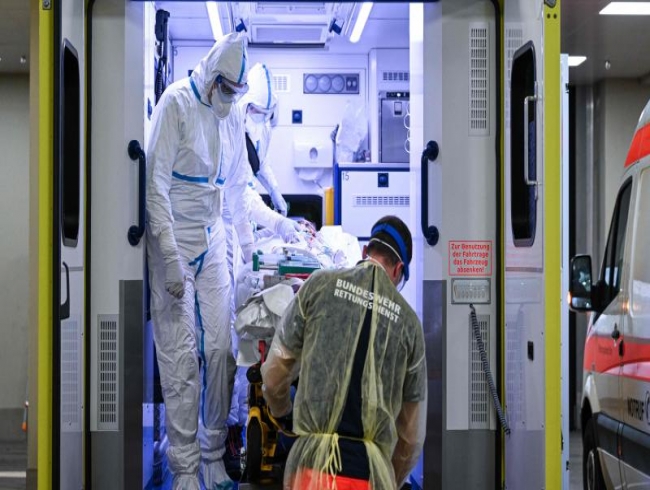
In the race against the coronavirus, Germany is betting on widespread testing and quarantining to break the infection chain, a strategy borrowed from South Korea whose success in slowing the outbreak has become the envy of the world.
Germany is already carrying out more coronavirus tests than any other European country at a rate of 300,000 to 500,000 a week, according to officials.
But Chancellor Angela Merkel's government aims to ramp that up to at least 200,000 tests a day, according to an interior ministry document seen by several German media outlets.
The goal would be to test all those who suspect they have caught the virus, as well as the entire circle of people who have come into contact with a confirmed case.
Current testing criteria are focussed on those who are sick with COVID-19 symptoms and have had contact with a confirmed case.
The idea, according to the document, is to move from tests "that confirm the situation" to tests that "get ahead of it".
A crucial weapon in the battle would be the use of smartphone location data to trace a patient's recent movements, to more accurately track down and isolate potentially infected people.
While government officials and epidemiologists have come out in favour of cell-phone tracking, it remains a controversial idea in privacy-minded Germany, a nation haunted by the surveillance of the Nazi era and the communist-era Stasi secret police.
Germany is already carrying out more coronavirus tests than any other European country at a rate of 300,000 to 500,000 a week, according to officials.
But Chancellor Angela Merkel's government aims to ramp that up to at least 200,000 tests a day, according to an interior ministry document seen by several German media outlets.
The goal would be to test all those who suspect they have caught the virus, as well as the entire circle of people who have come into contact with a confirmed case.
Current testing criteria are focussed on those who are sick with COVID-19 symptoms and have had contact with a confirmed case.
The idea, according to the document, is to move from tests "that confirm the situation" to tests that "get ahead of it".
A crucial weapon in the battle would be the use of smartphone location data to trace a patient's recent movements, to more accurately track down and isolate potentially infected people.
While government officials and epidemiologists have come out in favour of cell-phone tracking, it remains a controversial idea in privacy-minded Germany, a nation haunted by the surveillance of the Nazi era and the communist-era Stasi secret police.

- Amitabh Bachchan admits difficulty decoding Gen Z slang
- Yash takes out extra time time to pose for selfies with fans before leaving Mumbai airport
- Bollywood stars shower blessings on Anshula Kapoor Rohan Thakkar at wedding reception
- Shilpa Shirodkar recalls losing Chaiya Chaiya with SRK
- Watch Russian couple dramatic proposal atop Empire State Building sparks global buzz
- Aamir Khan says his wedding with partner Gauri Spratt will be intimate affair with family and friends
- Actress Sreeleela recalls balancing MBBS medical exams with Viral Vayyari song shoot on Doctors Day
- US removes four Indian firms from sanctions list
- Suriya joins hands with T J Gnanavel for new hombale films project
- US Iran agree to sustain Strait of Hormuz ceasefire resume broader nuclear talks
- Telangana Governor CM Revanth Reddy urge people to join fight against drug abuse
- Samantha Confirms Pregnancy Shares Maternity Leave Plans Have To Take A Small Break
- Allu Arjun to appear in court on Monday in Sandhya Theatre stampede case
- Yoga centres to be set up in all villages announces CM Chandrababu Naidu
- Gujarat polls second phase: PM Modi casts vote in Ahmedabad
More News
Photos






Latest
- ‘Mirzapur: The Movie’ crosses Rs 100 crore at domestic box office in opening weekend
- Amitabh Bachchan admits difficulty decoding Gen Z slang
- Watch: Nagarjuna releases trailer of Allari Naresh-starrer ‘Ramba Oorvasi Menaka’
- “Tum bahut lambe ho…”: Big B shares struggles of early acting days
- Nayanthara reveals how Geethu Mohandas convinced her to join ‘Toxic’
- Sonu Nigam says childhood anger fuelled his passion and shaped his singing career
- Yash takes out extra time time to pose for selfies with fans before leaving Mumbai airport
- Ravi Teja begins dubbing for ‘Irumudi’, set for Aug 21 release
- Dhanush did not enter cinema willingly and cried on his debut set, reveals father Kasthuri Raja
- Bollywood stars shower blessings on Anshula Kapoor Rohan Thakkar at wedding reception

Opinion Poll


Videos